Medicaid Work Requirements Are Coming, and States Disagree on How Fast
One outlet argues Medicaid needs work requirements. Other coverage shows states asking for delays and enrollees trying to figure out the rules. Here is what is going on.
For educational purposes only. Not investment advice.
- New Medicaid work requirements are approaching, and coverage shows states handling them differently.
- Modern Healthcare reports that states have asked for a delay, and Kentucky plans one even though a state law may conflict.
- West Virginia House Democrats want the governor to use a grace period, according to West Virginia Watch.
- City Journal argues that the requirements are needed, while NPR describes recipients trying to make sense of the system.
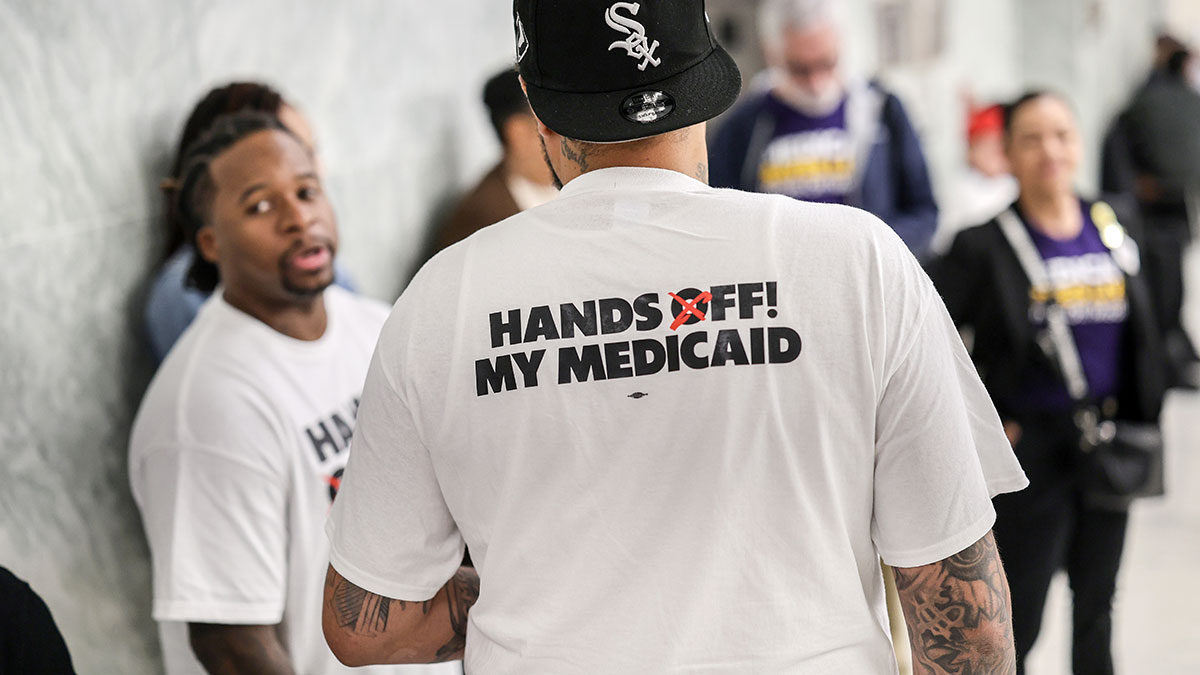
Medicaid is the government health insurance program for people with low incomes. Many adults who get it will soon have to show they are working, or doing something similar, to keep their coverage. Recent coverage shows a split: some people are making the case for the rules, while states and enrollees are working out how to put them into practice.
A City Journal piece is titled "Why Medicaid Needs Work Requirements." Most of the other coverage looks at the practical side: who is asking for more time, and how recipients are coping with a system that is changing around them.
What happened
Modern Healthcare reports that states have asked for a delay in carrying out Medicaid work requirements. Louisville Public Media reports that Kentucky plans to delay its requirements, but adds that a state law may conflict with that decision.
In West Virginia, the outlet West Virginia Watch reports that Democrats in the state House have asked Governor Patrick Morrisey to use a grace period that delays the requirements. NPR reports that, with the new rules approaching, Medicaid recipients are trying to find their way through the system.
Background: how work requirements work
Some general context, separate from the news reports above: a federal law passed in 2025 told states to add work requirements for many working-age adults on Medicaid, mostly people who qualify under the program's expansion to low-income adults. In general, these rules ask people to prove a set number of hours each month of work, volunteering, job training or school. Some groups are usually exempt, such as parents of young children, people with disabilities and pregnant women.
States run Medicaid day to day, so they have to build the systems that check and report people's hours. The federal rules let states ask for extra time if they are making a good-faith effort to comply. That is why the words "delay" and "grace period" appear in several of these headlines. The exact details for each state depend on federal guidance and on state decisions.
How outlets are reading it
City Journal's headline treats the debate as a question of policy and argues that work requirements are needed. Supporters of this view usually say the rules encourage people to work and keep Medicaid focused on those who need it most.
The other outlets focus on how the rules get carried out. Modern Healthcare and Louisville Public Media look at states trying to slow things down. West Virginia Watch covers a political push for a delay. NPR centers its story on the people affected. Critics of work requirements often point out that people with jobs can still lose coverage because of paperwork problems, such as missed forms or reporting systems that are hard to use. These outlets don't disagree on the facts. They're asking different questions: whether the rules should exist at all, and whether states can run them smoothly.
Why it matters for everyday people
If you or someone in your family has Medicaid, these changes could affect how you keep your coverage. When the rules start, and what proof you'll need, may depend on your state. Kentucky's possible legal conflict shows that the timing may not be settled even after a state announces a plan.
For everyone else, the debate touches on bigger questions: how public health programs balance cost, fairness and access, and how much paperwork people should face to keep basic benefits. The best sources for current rules are your state's Medicaid agency and official notices.
| Publisher | Their angle | Original |
|---|---|---|
| City Journal | Opinion piece arguing Medicaid should have work requirements | Read ↗ at City Journal |
| NPR | Recipients struggling to navigate the system as the rules approach | Read ↗ at NPR |
| West Virginia Watch | West Virginia Democrats push the governor to use the grace period | Read ↗ at West Virginia Watch |
| Modern Healthcare | States ask for more time to put the requirements in place | Read ↗ at Modern Healthcare |
| Louisville Public Media | Kentucky's delay and a possible conflict with state law | Read ↗ at Louisville Public Media |
Words to know
- Medicaid
- A health insurance program for people with low incomes, paid for jointly by the federal government and the states and run by the states.
- Work requirement
- A rule that people must work, volunteer, train or go to school for a set number of hours to keep receiving a benefit.
- Grace period
- Extra time allowed before a rule takes full effect or before penalties apply.
- Medicaid expansion
- An option for states to cover more low-income adults under Medicaid. Many of these adults are the main group affected by work requirements.
Questions readers ask
Will I lose Medicaid if I don't work?
It depends on your state, your situation and whether you qualify for an exemption. Many groups, such as people with disabilities, are usually exempt. Check with your state Medicaid agency for the rules that apply to you.
Why are states asking for delays?
The headlines don't say exactly why. In general, states have to build new systems to track and verify people's hours, and that can take time. Federal rules allow some extra time for states making a good-faith effort.
What is the conflict in Kentucky?
Louisville Public Media reports that Kentucky plans to delay its requirements but that a state law may conflict with that choice. How that gets resolved has not been reported in these headlines.
For educational purposes only. Not investment advice. We do not recommend any stock, fund, broker or trading platform. Headlines are sourced from Google News · Business; every story links to the original publishers.