AI and Layoffs: What the New Job-Cut Trackers Do and Don't Tell Us
Several trackers now try to count job cuts linked to artificial intelligence. Some coverage warns about a possible recession, while other coverage also points to job gains.
For educational purposes only. Not investment advice.
- Several outlets and organizations now run trackers that count layoffs, and some focus on cuts linked to AI.
- CNET's headline says AI-driven tech layoffs could trigger a recession involving 1.6 million jobs. That is a possible scenario, not something that has already happened.
- According to PYMNTS, a Maryland tracker looks at national job gains as well as the risk of workers being displaced.
- Not every layoff is caused by AI, so it helps to check what each tracker actually counts.
Artificial intelligence is changing how many companies work, and people want to know what that means for jobs. One way they're trying to find out is with trackers: running lists or databases that record layoffs and, in some cases, try to tie them to AI.
Recent coverage shows several of these trackers at work. The outlets covering them don't all frame the picture the same way. Some focus on the risk of a big wave of job losses. Others also look at where jobs are being created.
What happened
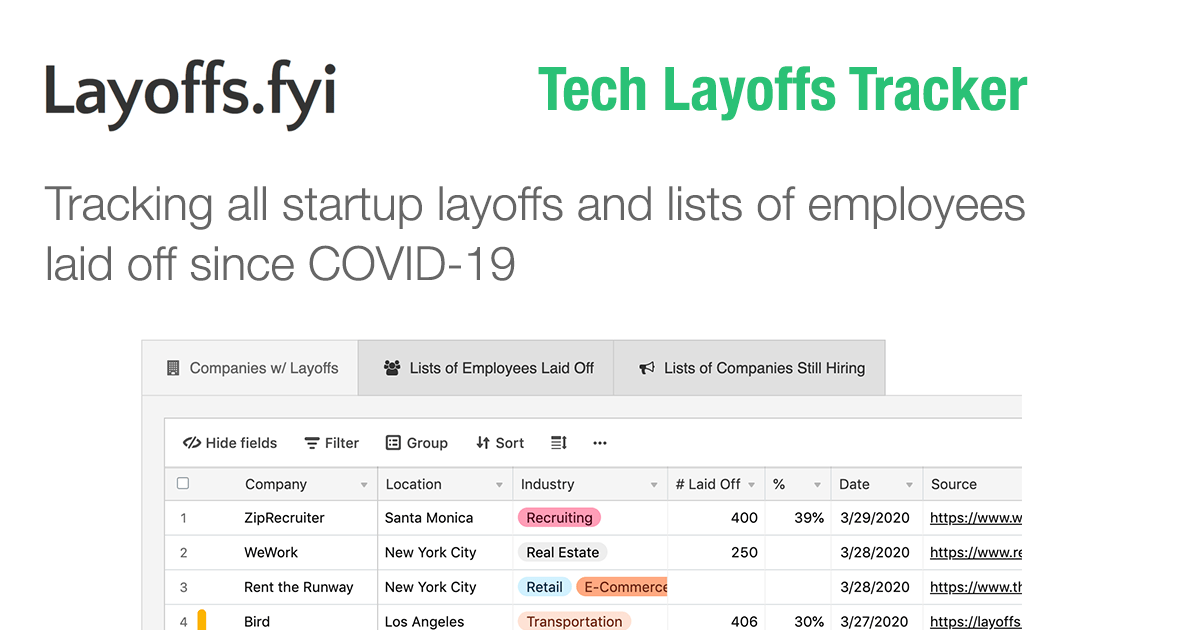
Layoffs.fyi, a website known for tracking job cuts at tech companies, has published an "AI Layoffs Tracker," according to a listing dated November 10, 2026. The headline doesn't give details on how the tracker decides whether a layoff is linked to AI.
On the same day, Modern Healthcare published an update to its own layoffs and closures tracker for the healthcare industry. The headline says Ascension, a healthcare organization, will lay off 51 employees. The headline doesn't say AI caused these cuts. It shows that layoff trackers cover many industries and many causes.
CNET ran a headline saying that AI-driven tech layoffs "could trigger a 1.6 million job recession." The word "could" matters here. It describes a possible scenario, not a recession that is already happening.
PYMNTS reported that a Maryland AI tracker focuses on national job gains as well as displacement risks. Displacement means workers losing their roles because their tasks are automated or reorganized.
How outlets are reading it
The headlines point to two different ways of looking at the same trend. CNET's framing is cautionary. It suggests that if AI-related cuts in tech keep adding up, the damage could spread to the wider economy.
The Maryland tracker, as PYMNTS describes it, takes a more mixed view. It counts the jobs AI may help create alongside the jobs it may put at risk. Layoffs.fyi and Modern Healthcare are mainly counting tools. They record announced cuts rather than making forecasts.
Background: economists have long argued about whether new technology destroys jobs overall or mostly moves them around. Past waves of automation removed some kinds of work and created others. How AI compares is still an open question, and that's partly why people are building trackers.
Why it matters for everyday people
For workers, these trackers can show which industries and kinds of jobs are seeing changes. But the numbers need context. A layoff tracker records announcements, and it can be hard to know how much a company's decision really comes down to AI. Cost-cutting, slowing demand and restructuring can all play a part, and companies don't always explain their reasons in detail.
Background: a recession is generally understood as a broad, lasting drop in economic activity. It usually shows up in rising unemployment and lower spending. A forecast of possible job losses is not the same as an official finding that a recession has started.
If you're trying to make sense of headlines like these, it helps to ask three questions. What does this tracker count? Does it include jobs created as well as jobs lost? Is this a record of what has happened or a projection of what might happen?
| Publisher | Their angle | Original |
|---|---|---|
| Layoffs.fyi | A dedicated tracker for AI-related layoffs | Read ↗ at Layoffs.fyi |
| Modern Healthcare | Healthcare layoffs tracker, led by a cut of 51 jobs at Ascension | Read ↗ at Modern Healthcare |
| CNET | Warning that AI-driven tech layoffs could lead to a recession involving 1.6 million jobs | Read ↗ at CNET |
| PYMNTS.com | A Maryland tracker that weighs national job gains against displacement risks | Read ↗ at PYMNTS.com |
Words to know
- Layoff
- When an employer ends people's jobs, usually for business reasons such as cost-cutting rather than individual performance.
- Job displacement
- When workers lose their roles because their tasks are automated, moved elsewhere or reorganized.
- Recession
- A broad, lasting decline in economic activity, usually marked by rising unemployment and falling spending.
- Layoff tracker
- A running list or database that records announced job cuts, often grouped by company, industry or cause.
Questions readers ask
Is AI causing a recession right now?
The headlines don't say that. CNET's headline says AI-driven tech layoffs could lead to a recession involving 1.6 million jobs. That describes a possible outcome, not something confirmed.
Are all layoffs on these trackers caused by AI?
No. For example, Modern Healthcare's tracker lists 51 layoffs at Ascension, and the headline doesn't link them to AI. Companies cut jobs for many reasons, so it's worth checking what each tracker counts.
Does AI only take jobs away?
Not necessarily. According to PYMNTS, Maryland's tracker looks at national job gains as well as displacement risks. That reflects a long-running debate about whether new technology mainly removes jobs or shifts them into new kinds of work.
For educational purposes only. Not investment advice. We do not recommend any stock, fund, broker or trading platform. Headlines are sourced from Google News · Business; every story links to the original publishers.